
DevOps is a methodology for creating software that helps developers and IT Operations teams build, test, implement, and sustain software. The main principles of DevOps are collaboration and automation throughout the whole process of software development. The top custom software companies use this methodology to deliver scalable applications.
How does DevOps work?
Collaboration & Communication
DevOps requires communication among developers, operations engineers, testers, and security experts to identify problems quickly and coordinate activities related to change, testing, deployment, and maintenance.
Automation in Software Development
Automation is the main characteristic of DevOps. This means you can automate processes like testing, building apps and software, and deployment. Continuous Integration refers to the process of continuously changing code and modifying it with the help of automation techniques. Continuous delivery, therefore, means that the code is ready for deployment.
First of all, we need to understand how DevOps speeds up development.
Fast Development cycle
Using DevOps, the development process becomes faster because of continuous testing, deployment, and integration of changes. Small changes are easier to evaluate and release on the market; hence, the company’s reaction to customer needs becomes much quicker.
Automated Testing and Deployment
Testing of the software is done automatically for every single change; therefore, it allows detecting problems at the earliest stages. Deployment is also automatic and covers all the stages, including development, testing, and production.
Quick Detection and Fixation of Bugs
Using DevOps, bugs will be detected sooner because of the automated testing process and continuous monitoring. It will be easier to examine the changes in the code that were made and to understand the reasons why bugs occurred.
Consistent Software Release
DevOps guarantees the consistency of software releases through automated processes, standardized procedures, and configuration of infrastructure. After that, the application can be tested and monitored before its release.
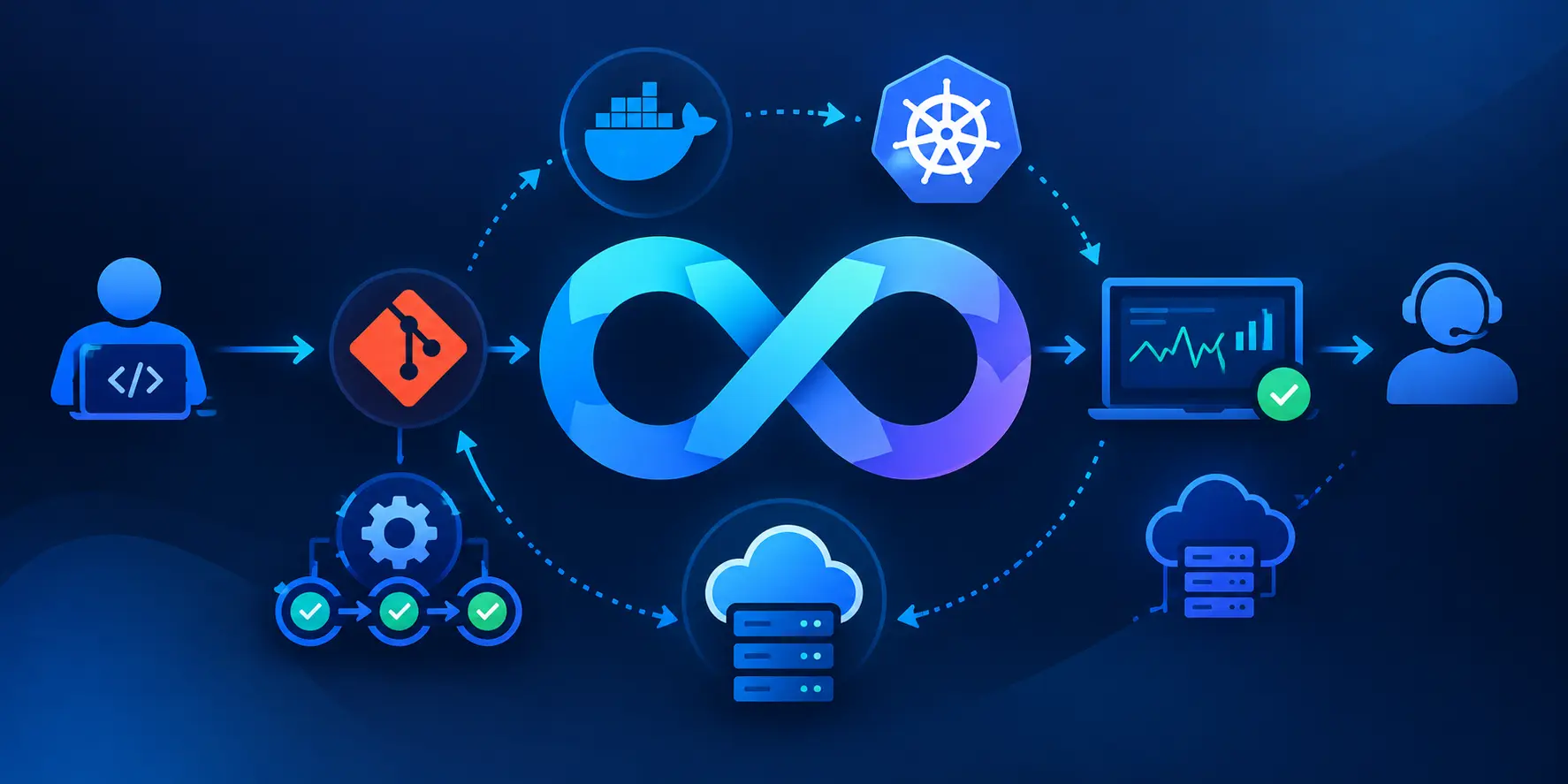
DevOps practices
This means you can automate processes like testing, building apps and software, and deployment.
Continuous Integration and Continuous Delivery
This process allows software developers to make changes to the software code and automate the process of verification. Continuous Delivery is the next phase in which the software is ready to be deployed. This procedure reduces the effort to configure different environments separately.
Continuous Monitoring
Continuous monitoring is the process of collecting data related to the performance of applications, status of the infrastructure, errors, availability, and other operational issues. This data can be used for detecting anomalies.
Automation Testing
Automation testing is the process of conducting tests on applications by utilizing automated testing tools.
What Is Docker and What Are the Benefits?
What does Docker mean?
Docker is applications and their dependencies packaged inside containers. The container will contain the application along with the dependencies needed for the app; this will aid in reducing differences between development, testing, and production environments.
How Docker Containers Work?
A Docker container runs applications in isolation using a shared operating system kernel. The image in Docker consists of both the requirements and the files for creating containers.
Continuous Integration (CI)
Continuous integration signifies a scheme of integrating changes made within a codebase and applying the automation of operations. This operation enables the developers to be aware of integration problems at early stages.
Continuous Delivery and Deployment (CD)
Continuous delivery refers to the state of the product being ready for release after being thoroughly checked. Continuous deployment is the highest level of automation when changes are implemented based on approvals into the production environment.
Infrastructure as Code (IaC)
Infrastructure as Code is the concept of outlining the elements of the infrastructure, like networks, servers, databases, etc., via configuration files and scripts. The use of containers will make starting up easy and will provide consistent environments. The developer has the choice of sharing a standardised application environment, hence reducing the difference in software performance on different machines.
Difference Between Docker and Traditional Deployment
Traditional deployments involve the installation and configuration of applications on the server directly, leading to differences in the environment. In contrast, the differences are reduced using Docker because of the provision of standardisation through the use of application and dependency containers. Containers need infrastructure for their running and management.
What Is Kubernetes? What Does Kubernetes Mean for DevOps?
What is your understanding of Kubernetes?
Kubernetes is also referred to as a software platform that runs applications in containers. The reason why companies use Kubernetes is the deployment, scaling, maintenance, and management of containers on a cluster of machines.
Orchestration of Containers by Kubernetes
Kubernetes has the ability to automate many operations that relate to containers, including scheduling, failover, distribution of applications, and networking. All these services are getting much more useful when there are many containers in an application.
Scaling Application With Kubernetes
Depending on the requirements and loads, the resources for an app can be scaled up or down. Multiple instances of an app can be launched, and load can be distributed among all the instances.
Kubernetes and Automatic App Deployment
Through the use of Kubernetes, it is possible to implement the application automatically, as well as to upgrade it automatically. Kubernetes is able to calculate the desired state of the application, and its procedures will involve processes that ensure that the required state is attained. Infrastructure as Code (IaC): Infrastructure as code is a manner of describing infrastructure elements such as networks, servers, databases, etc. in the form of configuration files and scripts. Kubernetes is a fitting technology for DevOps because it enables applications to be built, tested, and deployed without any hassle.
What is the Key Distinction Between Docker and Kubernetes?
Docker is used to create and run containers, whereas Kubernetes helps in controlling the containers. Docker is concerned with the creation of containers, while Kubernetes is about dealing with the management of the multiple containers located on different nodes.
How Do Docker and Kubernetes Work Together in DevOps?
As the main function, Docker is used to create and package the containers for the application, and Kubernetes is responsible for their management after deployment. Thus, the workflow of DevOps can be described as the process starting with building the Docker image, testing it, keeping the image in a container registry, and deploying it with the use of Kubernetes.
Advantages of DevOps With Docker and Kubernetes
Faster Releases
By using automation in DevOps along with Docker and Kubernetes, the manual process of deployment will be minimized; this will make applications portable and deployable quickly.
Enhancing Scalability
Docker allows the portability of application containers, whereas Kubernetes assists in container management.
Enhancement of Reliability
Automation of tests, containers, health checks, monitoring, and recoveries will improve reliability. Kubernetes will help in rebooting the containers in case of failure and preserve the application’s state, while DevOps helps in fast identification and problem-solving.
Consistent Development
Docker will help in packaging applications along with their dependencies, hence minimizing the differences across environments. Using identical container images in development, testing, and production will lead to application consistency.
Tools used in DevOps in Modern Software Development
Git and Version Control
The history of changes will be stored in Git, which will make collaboration among multiple developers easier during software development. Git is usually used as the starting point of the CI/CD process.
Jenkins and CI/CD
Jenkins is an automation server that will facilitate building, testing, and deployment of software. Jenkins links the source code repositories with the process of developing and deploying the software.
Docker
The containerization feature of Docker involves packaging applications along with their dependencies into portable containers. Application delivery is the ability offered by Docker.
Kubernetes
Kubernetes takes charge of containerized applications. This means that Kubernetes has many functions that it performs, such as deployment, scaling, networking, and self-healing.
Cloud Platforms
Cloud platforms offer infrastructure such as computing, storage, networking, databases, and more for DevOps use. Cloud platforms also offer automation and monitoring capabilities.