
What is ETRM, and why do skills matter?
ETRM is a business practice characterized by the use of application software intended to assist commodity trading, risk management, scheduling, and settlement processes within energy firms. The demand for etrm professional skills is at an all-time high since the year 2026 owing to the dynamic nature of the energy sector influenced by renewable energy sources, geopolitical developments, and increased regulations.
There has been a tremendous increase in the number of ETRM professionals required due to the increased need for people who will not only manage the systems but also develop market knowledge.
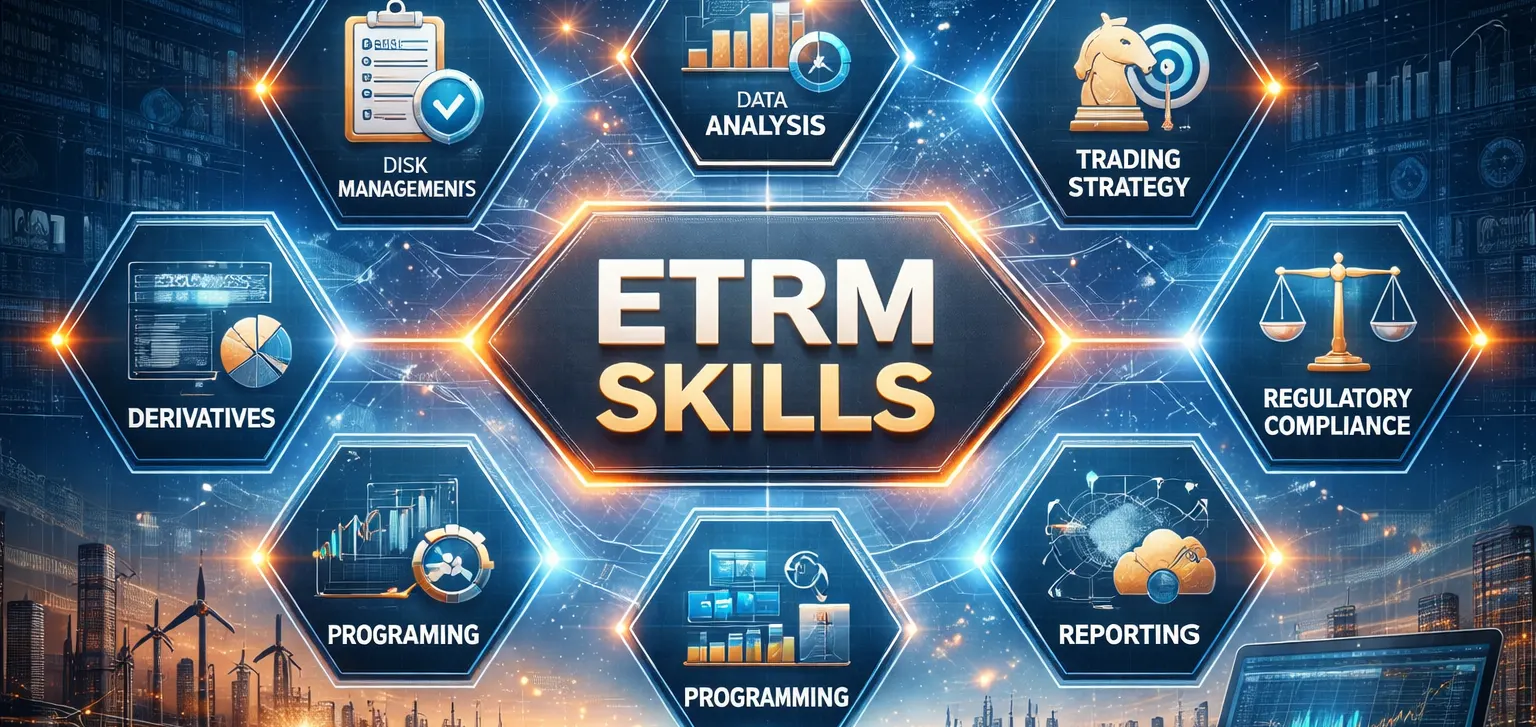
Core Technical Skills for ETRM Professionals
The first skill, which is very important for a successful ETRM specialist, is technical expertise. It involves working with databases, programming languages, and architecture. First of all, one is required to know SQL since such databases are critical to store structured data regarding processes executed by ETRM systems. Besides, one should understand how to create scripts through programming languages like Python and Java to execute automated actions and adapt the system.
It can be helpful to have some experience in integrating APIs and working with cloud computing environments, such as AWS and Microsoft Azure. Since most ETRM solutions tend to integrate with other apps, including market data and accounting systems, knowing such skills can be beneficial.
These technical skills can be very useful to solve practical issues and personalize ETRM platforms. For instance, one can use scripts to conduct automated transaction validation.
Understanding Energy Markets and Trading
Knowledge about technical aspects is not sufficient because there is a need for understanding the way the markets work. There is a need to have information about different types of energy, pricing strategies, the equilibrium between supply and demand, and the types of trading tools used, like futures, options, and swaps.
High-level knowledge about energy trading becomes clear when the expert has to examine the trends in the market and make changes in system parameters. There are some considerable differences between the electricity and oil markets due to the lack of storage capabilities in the former.
It is expected of the expert to detect abnormalities in trading statistics, develop effective pricing strategies, and provide correct reporting services. For example, it would be useful to note that in case of unexpected increases in prices for gas, there should be proper validation of the models employed.
Role of Data Analytics in ETRM
Data analytics plays a critical role in ETRM in 2026 due to the large amount of trading data generated each day. ETRM experts need to know how to analyze such information using data visualization software such as Power BI and Tableau, and statistical approaches.
Analyzing data is essential when making forecasts about the changes in prices, finding potential trading opportunities, and noticing abnormalities. For example, using a predictive algorithm based on weather forecasts makes it possible to predict the energy consumption and thus help traders in making appropriate decisions.
In practice, an analyst may apply the approach by analyzing historical data about price changes depending on seasons. In that way, it will be possible to develop strategies to minimize risks.
Risk Management Skills in Energy Trading
Risk management forms the backbone of any efficient ETRM. In the energy trading sector, there are different risks associated with operations, among which include market risk, credit risk, and operational risk. It is imperative to grasp different aspects of VaR, stress testing, and risk hedging.
ETRM career skills in risk management help professionals protect their respective organizations from financial damage. This is because companies trading crude oil futures have to ensure that all risks are mitigated through effective hedging strategies.
The practical application of the knowledge and skills acquired in risk management includes preparing daily risk reports and ensuring that risks do not exceed exposure limits. In cases of emergencies in the energy trading market, these energy trading skills are valuable.
Software and Tools used in ETRM
ETRM specialists use specific software programs like Openlink Endur, Allegro, and SAP IS-Oil. The software programs help professionals handle issues such as deal capture, scheduling, risk assessment, and settling transactions associated with energy trading.
Apart from the key software programs used in ETRM, there are other software tools that professionals use, such as Excel for analyzing data quickly, SQL for managing data, and reporting software to create dashboards. Workflow automation and scripting knowledge are important as well.
As professionals apply their knowledge in practice, they may employ their ETRM program to automate billing or integrate the program with the firm’s financial reporting systems.
Real Industry Use Cases of ETRM Skills
It is important to consider industrial applications of ETRM skills to better understand the significance of these competencies. An example can include trade lifecycle management, which involves the recording, validation, and settlement of trades.
Another application is risk reporting. ETRM specialists produce daily reports that show levels of exposure and related risks. This allows decision makers to adopt a preemptive approach in order to avoid financial losses.
In renewable energy trading, there is a need to monitor the production of energy using sources that can change, such as wind or sunlight. This means that specialists have to work on fulfilling contractual obligations while dealing with changing amounts of electricity available.
One possible example is trading electricity between regions. The ETRM specialists make sure that schedules match grid specifications, current prices are reflected, and settlements are made correctly. If not for ETRM professionals, such activities can lead to serious mistakes.
Soft Skills Required for ETRM Careers
Technical and domain expertise are not all that is needed in an ETRM job; soft skills are very important too. Communication is extremely important in order to be able to work well with other traders, IT staff, and management. Being able to articulate technical information into something understandable is very important.
Problem-solving is one of the most important skills, as problems occur in the functioning of the system or during trading itself. The ability to make decisions under pressure is a very valuable trait. Another skill that is needed is attention to detail. Errors in trading data can cost millions of dollars.
How to Start Building ETRM Skills
A proper strategy should be adopted for building skills. One must first ensure that he or she has gained good knowledge about energy markets and the concept of trading. This can be achieved by taking online classes and earning certifications for commodities, derivatives, and risk management.
The next step involves acquiring good skills in technology, particularly languages such as SQL and Python, and data analysis. Practical experience will greatly help in achieving this; hence, one should start doing work with real data sets.
Acquiring proficiency in an ETRM system like the Openlink Endur can make one stand out in the job market.
It is important to intern in energy firms and acquire entry-level jobs to gain experience.
Conclusion:
ETRM specialists will be especially important in 2026 because of the high level of complexity and large amounts of data in the energy sector. It is important to be a specialist not only in the technical component of the energy market but also to have vast expertise in terms of market analysis and other soft skills.
People who build up the competencies described above and understand how to apply them will be extremely valued by corporations.